

Archive for December, 2021
4 Steps to a Green Lawn in the Spring
- admin1
- No Comments
- December 19, 2021
It’s not uncommon to observe symptoms of salt damage on your lawn in the northernmost regions. The cold grip of winter is beginning to relax. The signs of life are beginning to emerge, but there’s still some work to be done before you can start throwing garden parties or sipping lemonade in the backyard. Here are a few actions you can take to help your grass come back to life and make your yard envious. Despite popular assumption, dead grass does not imply hopelessness. There are still plenty of options for restoring that lush, green-envy lawn after a season of dormant grass and dreary days. Remove any debris from the grass before watering once or twice weekly during periods of no rain, though extra watering may be required if there is no rain. Provide enough water to wet the soil to a depth of 6 inches. Watering the grass seldom but deeply stimulates it to develop deep, strong roots that will help it endure drought later in the summer. Saltwater tastes great in meals, but it’s not so great when it’s strewn across your lawn, perhaps leaving brown patches. It’s not uncommon to observe symptoms of salt damage on your lawn in the northernmost regions, where salt spray is popular throughout the winter. So, do you think you can repair salt damage? Yes, and it’s actually rather simple! Say hello to healthy grass by watering your lawn to dilute the salt content. Snow mold is a stealthy disease that primarily affects cool-season grasses and only appears once the snow melts in the spring season. Snow mold appears after a big snowfall when the earth has not yet frozen completely. Mold grows slowly within the grass due to the already damp grass, leaves, and debris. Snow mold comes in two varieties: gray snow mold and pink snow mold. Straw-colored circular patches varying in size from a few inches to several feet across may appear in the lawn once the snow melts in the spring. In these areas, the grass is frequently matted and crusty. If the patches are caused by gray snow mold, they will appear grayish-white, and if they are caused by pink snow mold, they will appear whitish-pink. Pink snow mold is more dangerous than gray snow mold because it can harm grass plants’ crowns and roots, although gray snow mold normally only affects the grass blades. Small pieces of dry grass accumulate on the top layer of your grass over time, often forming a thick coating. Inspecting the thatch layer on your grass is one technique to care for it. Core stimulation will break up the thatch and allow water, nutrients, and oxygen to reach the roots if the layer of fallen grass and organic matter on top of the soil is thicker than one-half inch. It’s not necessary for the green grass of your dreams to merely exist in your dreams. If you’re dealing with barren places on your lawn, you might be thinking if seed or sod is the best choice.
20 Tips for Making a Small Garden Look Larger
- admin1
- No Comments
- December 19, 2021
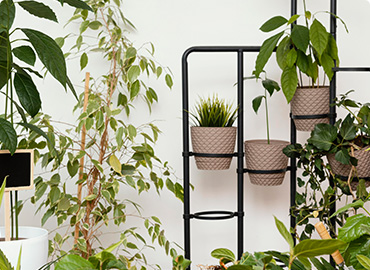
Although it may appear counterintuitive, separating a tiny space into smaller parts based on function actually lets a small yard breathe. When divided into smaller micro zones, a long and narrow yard can have a water garden, al fresco dining area, play space, hardworking storage shed, and plenty of flowers for filling vases. Use varying heights to separate different portions of your outdoor space. You can keep it simple with a raised bed or a raised wooden deck, or go all out with an artistically terraced endeavor that separates the kids’ play area from the rest of the outdoor living space. Maintain a comparable material underfoot as you divide your garden into functional regions to weave a connecting thread between the spaces. A simple visual indication, such as gravel or scarlet rocks, indicates that locations, such as a container garden forest, a reflecting pool, and a perennial wildflower border, are linked by more than simply geographical closeness. Avoid utilizing hardscape materials that are too large for the space in a tiny garden. They have the potential to overwhelm a tiny yard Bringing the sky into the yard is a sure-fire method to make a modest garden appear as huge as the great outdoors. A mirrored surface created by a water garden with a black liner reflects the sky and light into this small space. Trim trees in your garden so that their branches don’t hide the sky. Maintaining an upward perspective creates a roomy ambiance in small spaces. Structures, furnishings, and even individual plants are all subject to the same rule. Choose trees with neat dimensions that suit the garden rather than overwhelming it. Many dwarf-growing plants and trees have the same impact as larger varieties. If you have a small garden, get imaginative with containers and skip the earth-bound beds. Invest in simple planting boxes and wall planters or a wooden wall trellis. We have a choice of wall planters with coco liners to fit any size wall or fence! When you add the sound of trickling water to a tiny environment, it appears to expand. Choose a small tabletop fountain, a wall fountain with a modest footprint, or a DIY water feature that you construct yourself. Trickling water creates an instant sense of calm, attracts songbirds, and helps to mask distracting noises in a tiny garden. Consider the influence on drainage before making any height modifications, adding raised beds, or removing lawn in a tiny garden. It’s a good idea to contact us if you’re adding hard surfaces and terraces to make sure you’re not causing drainage problems. Small gardens are renowned for requiring meticulous draining.
- 1
- 2